Thursday, August 29, 2013

PDP-8/e Replica - build your own


This PDP8/e replica construction article at Tronola.com may be of interest to some of the folks that like PDP8 minicomputers.  I have sold all the original PDP8 computers I  had  in my collection. The number of collectors wanting them was more then I was expecting .  Perhaps this will be helpful. Send Message CLICK   Like us Click


Here is the annoucement from Steve Lafferty:

Hi Folks,

I'm pleased to announce that Tronola.com has just published a comprehensive new construction article
on the Spare Time Gizmos SBC6120/FP6120. This soup-to-nuts, four-part presentation, is loaded with tips on building the PDP-8/e replica. It includes coverage of updated parts lists, mass storage, software installation, an attractive enclosure and support software:
Building a Replica of the PDP-8/e

A reader comments section is provided at the bottom of the first page and feedback and corrections
are most welcome. Enjoy!

Steve Lafferty
 Tronola.com


  Great day here in Floyd Virginia - busy with our museum work.
"By David Larsen"      KK4WW Computer Collector Historian  

Tuesday, August 27, 2013

MMD-1 Vintage 8080 Microcomputer reported to be the First Single Board Computer


 The first single board computer - MMD1
Click on photos to enlarge
Original Prototype MMD1
 The Microcomputer Trainer MMD -1 designed by John Titus is in the Wikipedia listing for Single Board Computers as the first single board microcomputer.

Production Model
We originally called the computer "Dyna -Micro" and the the production units were called "MMD1" - that was just short for 'Mini Micro Designer'. The Wikipedia listing for the single board computer does not mention John Titus as the designer - it does mention the computer was made popular by  Bugbooks. Bugbooks 5 and 6  used with this computer. An
original prototype is on display in our "Bugbook Historical Microcomputer Museum".


John Titus tells in his own words the development of the MMD-1 computer

 The second item about the microcomputer pioneering work by John Titus ----

Dr. John Titus
The  MARK8 computer construction article published in the July 1974 Radio Electronics  by John Titus was a Milestone for the magazine in the computer revolution. According to Wikipedia - Radio-Electronics featured audio, radio, television and computer technology. The most notable articles were the TV Typewriter (September 1973)[1] and the Mark-8 computer (July 1974).[2] These two issues are considered milestones in the home computer revolution.[3]


Here is where you can get a real good view of John's 'MARK8' work - this was put together by authors at Florida Gulf Coast University and was copyright 2007.   

Here are some really nice comments John made about our work together more than 35 years ago.

Me - David

 It has always been a great pleasure for me to be a colleague of Dr. John Titus. The work we did together in the 'Blacksburg Group' 38 years ago was a real highlight in my electronics and computer journey. John is retired and living in Utah near family. Thank you John for the memories.
"By David Larsen" KK4WW Computer Collector Historian  
Send Message CLICK   Like us Click


Monday, August 19, 2013

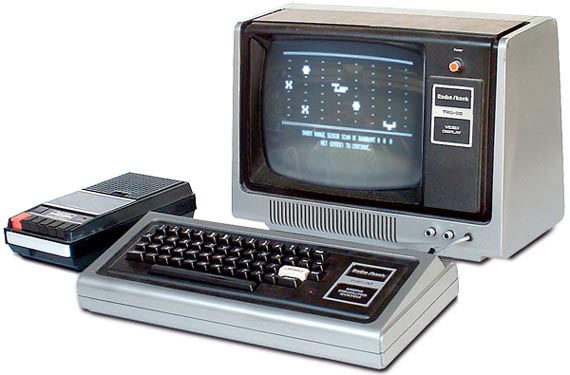
Vintage Computer TRS80 - Lewis Kornfield Died Friday August 16,2013 : President of Radio Shack in 1977 & produced the TRS-80 Model 1

Lewis Kornfield  (97) died Friday 8-16-13 - he was president of Radio Shack in 1977 the year of the Plug and Play computers -the  TRS-80 Model 1, Apple 2 , and the Commodore Pet 2001


The Radio Shack TRS 80 Model 1 computer was the computer many folks used to learn about computing in the late 70's and early 80's.  It was low cost and worked right out of the box.

TRS 80 Interface Trainer
TRS 80 -1
I used the TRS -80 Model 1 for many years teaching Instrumentation and Automation at Virginia Tech & in Workshops for professional techies.  Our group (The Blacksburg Group) designed an engineering / teaching system that allowed us access to all the Input / Output signals. Several books were also written about the TRS-80 in our "Blacksburg Continuing Education Series"

Radio Shack was important player for a few years in the microcomputer revolution and Lewis Kornfield made a good choice to produce the TRS - 80 Model 1 in 1977.


                           Early TRS - 80 Model 1 Advertising

       Here is a  story about Lewis Kornfield on C/NET  by

David Larsen
Send Message CLICK   Like us Click


KK4WW Computer Collector Historian

Tuesday, August 13, 2013

"The First Apple" A fresh look at Apple 1 computer pioneers / collectors by Author, Bob Luther - His Book

----------------------------------------------------------------------
NEWS FLASH - Bob Luther is selling his "First Apple 1 Computer"  December 11,2014 at Christie's Auction.  
-----------------------------------------------------------------------
"the first Apple" - Bob Luther's - fresh off the press - book is full of interesting and often intriguing interviews of some of the folks associated with the start up of the Apple Computer Company. Bob has reason to believe the Apple 1 computer he purchased at a Sheriff's Sale in 2004 is the first one sold by the Apple Company to a consumer.  He interviewed many techies, historians and collectors of Apple memorabilia to document his Apple 1 computer. This is a great story of his fortunate find and being the winning bidder.  I have found every interview he did in researching the material for his book held my interest - I read most of the book in one setting. I was fascinated to learn all the tidbits of information and sometime intrigue about the various eclectic folks associated  the Apple 1 computer as told in "the first Apple" book.  Send Message CLICK   Like us Click

           Bob Luther tells you in his own voice what inspired him to write his book "the first Apple"

Bob started collecting as a young teenager and before he had a drivers license he purchased 1962 Corvette. When he was able to drive he had 1963 Red Mercedes sedan. He read classified advertising over the years an became a skilled "Picker" of interesting and valuable / collectable stuff.  In 2004 Bob read a small classified advertisement in the Washington Post about a sheriff's sale of items seized from a wealthy dot com entrepreneur who had fled the US. The sheriff was selling a large quantity of very rare and collectable items. The sale was on a very cold Saturday and Bob braved the cold and purchased several rare items including the Apple 1 microcomputer - the Apple 1 eventually resulted  in his writing the  book "the first Apple".  I have read the book and it is a very interesting story about his computer and the interviews he did with collectors and pioneers associated with the Apple company and his Apple 1. 

Here is where you can get more information: I highly reccommend Bob's book as a great read for anyone interested in how the Apple 1 was a major player in the computer revolution.
www.thefirstapple.com
www.facebook/thefirstapple
Here is where you can buy your copy Amazon  Soft Cover book : here is ebook link A nice introduction to Bob Luther as author here.


 Update - Bob talks about shipping books for his Kickstarter program - 8-22-13

LR Bob Luther - David Larsen
 About 2 years ago I received a phone call from Sarah Hutton - a research intern at that time for Bob. She had many good questions for me as the owner of several Apple 1 Computers. About one year ago Bob came to Floyd, Virginia for a visit and to interview me about our Apple 1 experiences. I am delighted that the interview ended up in the  book as the former Christmas Tree Grower in Southwest Virginia.  

my favorite reading place
I have been associated with computers for more than 50 years and was totally engaged during the first 30 years of the microcomputer revolution while teaching at Virginia Tech.  I continue to this day as a serious collector and historian of microcomputer memorabilia. I have learned a host of new and interesting stories  from Bob's book - Anyone with an interest in computer history and specially about Apple 1 computers will find this book keeping them up at night well past regular bed time.
"By David Larsen" KK4WW Computer Collector Historian


Sunday, August 11, 2013

Vintage Computer - Jack Rubin heads for Chicago with PDP8I Minicomputer for his collection


Jack & Pat Rubin
Jack Rubin and his wife Pat visited our "Bugbook Historical Microcomputer Museum" today to pick up a PDP8I Minicomputer for Jack's collection. He is retired now and plans to restore and make this an operational minicomputer. Jack and I had time to compare a lot of ideas about setting up a good museum display and we would both like to have our computers on display for folks to enjoy. I do have my small display in Floyd and people really like to see the computers and memorabilia however it is a very small part of our collection.   We also had time to visit our museum display in Floyd Viriginia as well as our Chantilly Farm.
                      Click here to send a Tweet hashtag #KK4WW if you enjoy the blog or have a comment


                                 PDP8I for Jack Rubin's Vintage Computer Collection


  Jack Rubin & David Larsen in                                          Pat Rubin & Gaynell Larsen
 "Bugbook Historical Microcomputer                        in front of calculator museum display
Museum" computer display


Pat next to part of old ham radio collection          Pat, Jack & Gaynell after lunch at Larsen's


Dave & Gaynell Larsen
It has been a great weekend for my wife Gaynell and I. WOW it actually started on Friday with the visit of Bob Rosenbloom from California to pick up his 3 new computers. See story here Click. Saturday 8AM - ham radio meeting with the "Floyd Amateur Radio Society" , latter in the morning meeting with client. Then in
the afternoon we traveled to Appomattox,Virginia for a High School class reunion for Gaynell. We got up early Sunday to come back to Floyd so we would be here when Jack and his wife arrived.  We timed it just right as we arrived within 10 minutes of the Rubin's arrival in Floyd.  Then a little touring of our computer museum and the local area & out to the warehouse to load up PDP8I for Jack.  We had some good conversation with Jack and Pat -They plan to come visit next May on Memorial Day and join us at our Chantilly Farm for our 4th annual Bluegrass Festival & that will be fun- then a lunch prepared by Gaynell.  A few photos and we sent Jack and Pat on the way to Chicago. I am just finishing this blog and the  video of the visit at 6PM. Its been great and now I am ready to sit down and relax.
"by David Larsen" KK4WW Computer Collector Historian 

Friday, August 9, 2013

Vintage Computers- PDP8s & PDP8 Minicomputers have a new home with Bob Rosenbloom

LR Bob & Dave
Bob Rosenbloom came in early this morning by plane from Santa Cruz, California and arrived  at the "Bugbook Historical Microcomputer Museum" warehouse ready to load up by 10:30 AM. Our loading crew arrived about 10 minutes later. Bob's rented truck was loaded with the PDP8S, PDP8 minicomputer and the Systron Donner Analog Computer in about 1 hour - the loading really went smoothly as the Analog computer weighs in at 800 pounds - we used a forklift to get this on the truck. Bob also loaded an ASR33 Teletype for the PDP computers.   The PDP8S was rather small and light weight - it went into the  passenger seat of the truck for a cushy ride to California.
Bob was treated to a Virginia Lunch at our house by my wife Gaynell. Bob and I then did a 2 hour tour of our area that included the "Bugbook Historical Microcomputer Museum" and our "Chantilly Festival Farm" . It was about 3:30 PM however for Bob's California time it was only 12:30 and he took to the road to get a good start on his 2700 mile journey to Sana Cruz, CA.

Update - My wife and I visited Bob Rosenbloom and Lyle Beckley - in October 2013 after they had purchased computers from  our collection - great visit we  also visited the Computer History Museum while in CA.

   Bob arrived today and here is a few words about the journey in his own words, 8-9-13

                          Video of Bob's visit in his words


 The Systron Donner Analog computer weighs 800 pounds - a forklift was need to get this on the truck.


 Easy fellows, this is important cargo.


 On the truck - easy with the right equipment.


Analog Computer strapped down for the 2700 mile journey.  Loading crew Nate, Bob and Jason.


Dave - curator of the "Bugbook Historical Microcomputer Museum" inspecting the passenger, the PDP8S.


More to be added to this blog - I need some sleep now.


 Here is a look at some of Bob's Vintage Computers.


Send a Click here to send TWEET  hashtag #KK4WW if you enjoy the blog or have a comment  
 Museum Facebook page

WOW it was great to load these computers for a new home and  Bob is sure excited to have them for his collection. Bob really likes the vintage minicomputers and other large antique computer memorabilia.  I like all this also however I am working more with the historical Microcomputers. All of our staff are delighted to see these computers go to a new home where they will be treated very special.
"By David Larsen" KK4WW Computer Collector Historian.

Thursday, August 8, 2013

Bob Rosenbloom is heading to Virginia for vintage PDP computers for his Collection

A PDP8, PDP8S and Systron Donner model 80 Analog Computer will be leaving the 'Bugbook Historical Microcomputer Museum' collection for new home this weekend.  Vintage computer collector Bob Rosenbloom is arriving tomorrow on a Red Eye flight.  Bob will be taking these additions to his collection home in a rented truck. This is a long drive to his home in California however Bob feels more confident in personally picking up the computers then trusting a commercial shipper.  I will post more on this adventure for Bob and I as we pack the computers in this rented truck and he is off to California.


Just received email Bob is on the plane and we expect him here in  Floyd VA about 10AM today. 
WOW good timing he arrived today at 10:30AM - see next blog for more.

Bob and some of his collection


 Here is a look at some of Bob's Vintage Computers.


"By David Larsen" KK4WW Computer Collector

Wednesday, August 7, 2013

Vintage Computers - Apple Computer Historical data

The LCF Group has several Apple 1 computers in our "Bugbook Historical Microcomputer Museum" and the stories about the early start up days of Apple Company are always of interest.


Steven Wayhrich, MD
The information below is from the website of  Steven Weyhricha family practice physician in Omaha, Nebraska. Steven's writing's about Apple history is very informative and the paragraph below is directly from his web page.
  

The Start of the Apple Computer Company
Original Apple Logo
""By early 1976, Steve Wozniak had completed his 6502-based computer and would display enhancements or modifications at the bi-weekly Homebrew Computer Club meetings. Steve Jobs was a 21 year old friend of Wozniak’s and also a visitor at the Homebrew club. He had worked with Wozniak in the past (together they designed the arcade game “Breakout” for Atari) and was very interested in his computer. During the design process Jobs made suggestions that helped shape the final product, such as the use of the newer dynamic RAMs instead of older, more expensive static RAMs. He suggested to Wozniak that they get some printed circuit boards made for the computer and sell it at the club for people to assemble themselves. They pooled their financial resources together to have PC boards made, and on April 1st, 1976 they officially formed the Apple Computer Company. Jobs had recently worked at an organic apple orchard, and liked the
name because “he thought of the apple as the perfect fruit–it has a high nutritional content, it comes in a nice package, it doesn’t damage easily–and he wanted Apple to be the perfect company. Besides, they couldn’t come up with a better name.”  "" The above from Steven Weyhrich's website.

Read the whole story on Steven's website about how the Apple Computer Company was started by Jobs and Wozniak in 1976.


Send a Click here to send TWEET  hashtag #KK4WW if you enjoy the blog or have a comment  
 Museum Facebook page -

Thank you for reading my blog - if you like info, news and stories about vintage computers please subscribe or follow by email.  Thank You -Dave

David & Gaynell Larsen
The interest in the Apple Computer Company is on the increase almost daily now. Several movies are being  produced about Steve Jobs and these increase buzz about Apple Inc. I was working  in the early days of microcomputers  as faculty member at Virginia Tech and a member of the Blackburg Group.

"by David Larsen" KK4WW    Computer Collector/Historian

Friday, August 2, 2013

Vintage Computer 1958 Transistor Logic - Autonetics Recomp


Recomp
 Recently I was working in our computer museum warehouse and brought out a computer made in 1958 with transistor logic. It is an Autonetics Recomp 501 digital computer. This looks like an attempt by Autonetics to make a commercial computer from the cards and designs used in the Minuteman 1 ICBM guidance computer. Not many of these computers were made and this one is serial number 003. I located one additional Recomp computer in a California museum.  These computers had a very limited success commercially  however it sure is an interesting piece of hardware - they called it a portable office computer.  You will enjoy the photos.
Update 10-26-14 I think the Recomp 501 was first then the Minuteman 1 computer.
This really brings back some old memories of my college days. I worked at Autonetics during the summer of 1959 testing the Minuteman 1 computer - it is a small world. This has to be about the first transistor logic digital computer. The transistor was invented in 1947 and first used commercially in about 1955 or 56. 
Paragraph below is  from Wikipedia  .
 Autonetics built a portable office computer and ranging radar for trainers and fighters and was responsible for the guidance and control system for the Boeing-built Minuteman missiles. The division ultimately produced the Monica family of microcomputers, the D-17B Minuteman I computer, and the D-37B [4] and D-37C Minuteman II computer, in which microminiaturization reduced weight by two-thirds. Autonetics also developed and tested flight programs for the D37D Minuteman III computer.

 I don't see much information about the Recomp and would like to hear from anyone who used one or has any stories to tell about this computer. Do you know where I could obtain a Minuteman 1 computer ?

 ---------------------------------------------------------------------------------------------------
These photo's are my computer - See additional  interesting views online with the link below these photo's.


  Photo 1
The LOGO name plate                  


                                      Photo 2
Right wing with transistor modules - these swing out and you can get at all the wiring from the back side - see photo 5 for wiring view.


Photo 3
Left wing with transistor modules - this also swings out for complete access.


Photo 4
Drum memory - looks like the all the registers as well as the data are on this form of memory - ie Accumulator - the instructions were executed serially so this is a very slow computer.


Photo 5
All the wiring in the connecting cables is white and soldered point to point. Very
labor intense to make in those days. Looks like trouble shooting this would be a challenge.


Photo 6
Here you can see a close up of the wiring to the card connectors. A cold solder joint could be a hard problem to find.


CLICK here to send a tweet  if you enjoy the blog or have a comment use hashtag #KK4WW  Appreciate a like on Museum Facebook Page.
-------------------------------------------------------------------------------------------------
Here are some really good photos on line of an Autonetics Recomp (CLICK) - when you go to the first photo click on the photo to see index of more views. This is nice. If you search around this site some you can also find PDF files of the manuals. Looks like complete documentation on line for this old computer.


Tomorrow morning I am going to the Roanoke Virginia Hamfest and sell some of my extra amateur radio equipment. I am trying to be less  of a hoarder of  radios from my 60 years as an amateur radio operator. Tomorrow afternoon my wife -Gaynell - & I are going to a big fish fry at a cousin's place on the James River.  Should be a fun weekend.
"By David Larsen" KK4WW Computer Collector / Historian

Thursday, August 1, 2013

Vintage Computers - WVTF Public Radio & why we call our museum "Bugbook Historical Microcomputer Museum"

                                                                        Click to send Tweet
A good question came up during an interview with me by  Robbie Harris, (New River Valley Bureau Chief, WVTF / RADIO IQ / Virginia Public Radio) about our museum collection -- Why do we call our museum the  "Bugbook Historical Microcomputer Museum" ?

Here is the interview as it played on WVTF take a look/listen CLICK
Here is the short answer:

The reason I call our museum  "The Bugbook Historical Microcomputer Museum"  is because of the "Bugbooks" . About 1974 I was part of a team that produced these books. The first two Bugbooks were written and published by Professor Rony and I.  I named the books bugbooks because the small digital integrated circuit looked like a bug with its legs.  Professor Rony typed the manuscripts and we self published the first few printings of the "Bugbooks" .  www.bugbookcomputermuseum.com  These books were the start of a book series called "The Blacksburg Continuing Education Series" .  The books covered various topics of digital electronics, computers and software. Dr. John Titus and Dr. Chris Titus joined the group and became important members of our team.  During the period 1974 to 1984 about 75 books were published with a circulation of over 1 million copies.  Our team hired 31 other authors to help write books in the series. In addition to the books our team designed several computers and other teaching / engineering aids that were sold world wide. John Titus was the computer designer and I designed the digital engineering  / teaching hardware aids.  Many engineers, technicians and  electronic hobbyist of the late 70's and 80s used  these books and hardware.  All the books and hardware are on display in our museum. A reoccurring comment from  folks visiting the museum is - I  learned digital electronics from the "Bugbooks". The Bugbook story involves many relationships, interesting events and eclectic people.  It is my  intent to get the details of these adventures in writing -- soon I hope.


The Bugbooks covered many electronic/digital topics - here is the cover to a private label publication of one of the "Bugbooks" our group did for the  Radio Shack Corporation.


Here is the interview Robbie Harris played on Public Radio about our museum 7-29-13

The whole story associated with the "Bugbooks" is fascinating and it took us down many paths during our 31 years of teaching at Virginia Tech (VT). A few topics included along the journey included teaching electronics & automation at VT and hundreds of microcomputer workshops in various countries, book publishing, designing electronic teaching hardware, working with dozens of eclectic folks, working with the many companies that sold our books & hardware - the list gets long and includes some interesting litigation that is always present in complex relationships.
"By David Larsen" KK4WW Computer Collector / Historian