Showing posts with label computer. Show all posts

Tuesday, June 9, 2020

Computer Memory is now 4,000,000,000,000 time larger then 49 years ago

Bugbooks
info click

The Intel 1702A EPROM  (1971) has only 256 bytes of memory - today the USB Flash drive has 1 Terabyte of memory --- that is  an  incredible  4,000,000,000,000 times more memory.  This is a number so large I just can not sort it out in my mind. 

1000 GB or 1 Terabyte
Flash Drive. It would take
125.000,000,000 C2708 chips
to have this much memory!!!!

Moore's law seems to be working after 56 years. Gordon Moore made the observation and prediction in 1965 that the density of components on a silicon chip would double every 2 years. 


The USB Flash drive to the left has 1 Terabyte of memory.
That is 1000 Gigabytes.

It would take 125,000,000,000 of the Intel C-2708 Chips to equal this amount of memory.  A really big change in 56 years of technology.  This 1 Terabyte USB flash drive cost $39.00. 

Please note the Intel C-2708 has 125 times more memory than the Intel 1702 EPROM at the top of page. 


Help wanted 

 A project to make presentation displays for 
 2708 EPROM memory chips and a little history.

Intel C-2708 EPROM
memory chips.
I have 359 of these really nice Intel 2708 EPROM chips purchased in 1987. These chips are all nice white ceramic with gold pins and gold tops. They are part of my 45 years of collecting microcomputer memorabilia. 

What I want to do is make a presentation case/display for use as example of this early microcomputer and memory technology.  

Curious about EPROM memories - take a look here at a my blog post about the very first EPROM -  the Intel 1702A - Get an idea of  how and why they were used. "CLICK"


Intel C2708 EPROM 
A Smart display/presentation case is easily  possible.

A small Raspberry pie microcomputer can be included to provide many photos/videos and text that could be picked up on a smart phone using Bluetooth/WiFi connection. The unit could be connected to the internet with WiFi and linked to selected information on line about the history of microcomputers.

The use of these EPROMs is nice because the quartz window allowing a view of the IC chip. You should know the window was not put there for you to look into the IC - the window allows the memory to be erased by exposing the chip to UV light.


Photo of the 2708 EPROM
silicon chip that is viewed through
the quartz window on the IC.

It would be very nice to include a way to see into the window on the 2708 and get some idea what the actual silicon chip looks like. This could be a magnifying glass or maybe a photo of the chip would be best. Of course with the smart part of the presentation case just a view of the proper web site may be best way to obtain  more information.


Bottom side of 2708 EPROM
showing date code of 1977 &
made in Malaysia.


All my IC 2708 chips have a 1977 date code time of manufacture.


More information about EPROM memories - here is my video of the 1702 the very first EPROM chip. You will find this interesting. 


Summary of project:

To build and market a beautiful small  presentation case about microcomputer technology - most  likely out of wood that could be on the desk or appropriate space on the wall. The unit could be just a nice piece on the desk of those who have an interest in microcomputer history or are currently involved in the technology.  It would be a great conversation piece with the smart technology to bone up on the history of microelectronic technology and a real piece of history included - the Intel 2708 EPROM. 

Contact Information"CLICK"                                                              


David Larsen
 Blog Author

"by David Larsen"  Chantilly Farm ownerComputer Historian, and amateur radio operator -KK4WW   & N4USA .  I work out of one of the Tiny Homes at Chantilly Farm. A great place to work if you like the to be out in nature. I am 81 and ready to sell Chantilly Farm - I have a few more  projects I would like to do - if you have an interest to know more give me a call. 540 392 2392


Friday, October 30, 2015

Wayne Green founder of; Byte magazine; 73 magazine, Kilobyte, Kilobaud,80 Micro & more

Bugbooks
info click
computer museum kk4ww
Wayne Green 
Wayne Green was a prolific person when it came to creating magazines, companies & 100,s of ideas for products. Wayne was also an amateur radio operator W2NSD and many of his creations were related to amateur radio as well as microcomputers.

I was well acquainted with Wayne and we had many meetings and discussions over the years.  He wanted to travel with our group going to the Soviet Union and his comment was "I can fix a lot of their problems'. This comment should give you the idea he had a very big ego and was sometimes eccentric & strange in the way he acted.   The short of this story is he did not go and cancelled at the last minute due to some business deal he was working on. I am sure his staying home was a real blessing for me as if he would have made the trip it would have been an international disaster.

Wayne did have a brilliance about him and created many successful ventures. He proclaimed to be the best in about  everything  including finance, marketing, health, food, travel, microcomputers, politics, cold fusion and the moon landing, the list does not end. He also served as a founder and first secretary of American Mensa.

computer museum
73 Magazine September 2003

I liked Wayne and helped write some articles for his publications over the years. Here is an issue of his ham radio magazine "73 Amateur Radio Today" September 2002 -  I furnished the cover photo and did a story about our "Foundation for Amateur International Radio Service" (FAIRS) work in Dominica. Read the FAIRS story.

That is me at the top of the ladder putting up our ham radio antenna's in Roseau, Dominica.

As we have said Wayne was an interesting fellow and Randy Kindig published "Floppy Days 48 - Kevin Savetz Interviews Wayne Green". This interview was January 29, 2013 and Wayne died the following September. This had to be nearly the last recorded interview given by Wayne Green.

I have posted the whole blog below with permission from Randy Kindig. I think you will find this interesting history about Mr. Green. You can even check out the FBI file on Wayne.

___________________________________________________________

Welcome to a special interview-only episode of the Floppy Days Podcast.  For this show, we have an interview conducted by Kevin Savetz, interviewer-extraordinaire from the Antic Podcast.  Kevin conducted this interview 2 years ago.  Since the interviewee and topic are not Atari-related, but are very much vintage computer related, Kevin and I thought perhaps Floppy Days would be a good medium for publishing this interview.

Wayne Green, Computer Magazine Publisher
Wayne Green was founder of 73 magazine; Byte magazine; Kilobyte, which became Kilobaud, then Kilobaud Microcomputing; 80 Micro magazine for the TRS-80; Hot Coco for the TRS-80 Color Computer; Run for the Commodore 64, inCider magazine for the Apple II; and several other computer magazines.

This interview took place over Skype on January 29, 2013, when I was doing research for a book about the very first personal computer magazines — Byte, Kilobyte, and Creative Computing. Although I've decided not to write the book, I am publishing the interviews that I did for them.
Wayne Green died on September 13, 2013, eight months after we did this interview.
Teaser quotes:

"Sharing is the big deal for me. When I find something fun, interesting, I have to share it."
"Steve Jobs ... I heard about the Apple computer so my wife and I stopped by to visit him. ... He took me out to the garage and showed it to me. He says, 'What do you think?' I said 'I think you've got a winner. There's a first computer conference is going to be in Atlantic City in two weeks. Be there.' He says 'Oh, I can't afford to fly.' I said, 'Take a bus. Be there.'"

"Amelia Earhart kept her plane at my dad's airport. ... I used to play in that when I was a kid. ... I'm one of the few people who knows exactly what happened to her."


Links:
Obituary:  http://www.arrl.org/news/ham-radio-publications-pioneer-visionary-iconoclast-wayne-green-w2nsd-sk

An article remembering Wayne: http://www.computerworld.com/article/2474900/windows-pcs/goodbye-wayne-green--and-thanks-for-the-memories.html

Wayne Green FBI file:  https://archive.org/details/Wanye_Green_FBI_FOIA_Request_Response

Kilobaud Microcomputing issues: https://archive.org/details/kilobaudmagazine 

See  Randall's original podcast here published October 24,2015.
________________________________________________________

Bugbook Historical Microcomputer Museum
David Larsen
Wayne Green was an interesting person and prolific writer. I always enjoyed reading his editorial "Never Say Die" in 73 Magazine .

           ."by David Larsen"  KK4WW Computer Collector Historian

Monday, September 28, 2015

Alexander Bell gets patent for Telephone - 3 minutes of history podcast


Bugbooks
info click

Bugbook Historical Microcomputer Museum
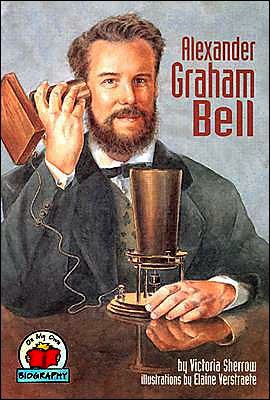
Alexander Graham Bell
Here is 3 minutes of how Alexander Bell received his telephone patent. This podcast story is told by Curtis Anderson N4ON curator of the Telephone Museum in Richmond, Virginia. Podcast made during a visit to the Bugbook Historical Microcomputer Museum.


Alexander Bell get telephone patent ahead of other inventor by chance.

Click photo to enlarge
Bugbook Historical Microcomputer Museum
Autonetics 1958 transistor computer
Oldest Transistor computer in the world


Curtis Anderson N4ON the story teller for our podcast today is inspecting what is perhaps the very oldest transistor computer in the world. This computer is on display in our museum.

The computer is an Autonetics Recomp 2.


Bugbook Historical Microcomputer Museum
David Larsen
Thank you for the visit Curtis - it was fun to talk about vintage computers and old times during our careers of 30 or more years ago.
           ."by David Larsen"  KK4WW Computer Collector Historian 

Tuesday, August 18, 2015

Microcomputer Computer Museum curator looks at old times, David Larsen KK4WW

Bugbooks
info click
When writing one of my blog post or working in the computer museum I always think about events in my past various careers. This may be of interest only to me however here are few milestones that came to mind tonight. My wife and I also get to talking about old times now and then and it is fun to look back over my 76+ years.

Bugbook Computer Museum
David Larsen W7VZW
My growing up years were in Oregon during the 40's & 50's.

This photo is my amateur radio station in 1954. My interest in electronics and amateur radio would determine my career for the next 51 years.

Graduated from Oregon State University in 1963 after a 2 years of duty in the Navy.

To enlarge "CLICK" on photo,s
Bugbook Computer Museum
David Larsen 1957 computer school
Started Navy duty in September 1957 and was sent to school at Remington Rand Univac in St. Paul, Mn. This was so long ago that the famous Dr. Grace Hopper was there at the same time working as senior scientist developing computer programming. She wrote the very first compiler program. Dr. Hopper was 51 years old at the time I was at Remington Rand Univac. She retired from the Navy in 1986 at 80 years old as  rear admiral and lived until 1992.


Bugbook Computer Museum
David did complete the training 

While in training for the Navy at Remington Rand Univac I did manager to complete several courses of study.

This was my first experience with computers and it created a curiosity about computers that has lasted to this very day.


Bugbook Computer Museum
David's First design project at VT
After graduating from Oregon State University in 1963 I worked as an engineer for several companies before my 31 years as a faculty member at Virginia Tech (VT).  The companies were Raytheon, Konel, Fairchild, and Varian Associates then on to VT in 1967 as a faculty member.

This photo taken in 1968 was one of my first projects at VT. I designed some circuits that would take the output of a digital multimeter and print & punch out the information on  paper tape using the ASR33 teletype. It may not seem like much now but data was read off a strip chart recorder and then manually digitized for computer entry before I designed this automated digital data logger.  A few years later I did some consulting for IBM and Analog Devices and they both built and sold commercial products using my ideas.

Bugbook Computer Museum
David teaching PDP-8
Interfacing workshop 1970
During my 31 years at Virginia Tech I taught many short courses in "Data Automation and Computer Instrumentation.  These workshops were just great and also provided travel to dozens of countries. Tonight just received an email from Nick Cloyes who attended one of our workshops in 1976 - a lot of reminiscing with this.


This photo is one of the early workshops using a PDP-8L Minicomputer about 1970. I did not do this work alone and was joined by various faculty during the 31 years at VT. Some of my colleagues were professors Dessy, Rony and Field, Jon Titus & Chris Titus at the Blacksburg Group and others on various occasions.


Teaching / Outreach award in 1995.
Virginia Tech, VT
David Larsen Outreach Award in Spectrum
It does not seem like 20 years ago - I was awarded the one of two of the very first Outreach awards at Virginia Tech ( VT ) . This was a real highlight and honor for me my last year of active teaching as a faculty member of the Chemistry Department at VT. Here is a little more information about this award.


Bugbook Computer Museum
Outboards - digital teaching aids

About 1974 I designed some very simple digital teaching modules and called them "Outboards". They were marketed by E & L Instruments of Derby, CT along with the Bugbooks and other products developed my colleagues at the Blacksburg Group.


Bugbook Computer Museum
Outboards


A catalog page from E & L Instruments showing a few of the "Outboards" in 1975. E & L also sold most of the digital products developed by our "Blacksburg Group" - some of the products were the MMD-1 computer, Bugbooks, Outboards, and other digital teaching equipment. See more here "CLICK"


Bugbook Computer Museum
teaching a digital electronics workshop 
Digital electronics were new to everyone in the late 60's and we taught many short courses to Virginia Tech faculty and researchers in digital electronics - learning all about Gates and Flip-Flops.

These folks are using the Outboards and powering the experiments with a 6 volt lanter battery.

That is me leaning over at the back of the room near the screen in 1974.

Bugbook Historical Microcomputer Museum
Their are many more milestones and stories along the way for me however; I have ended up at this time with a wonderful collection of microcomputer memorabilia and writing this blog. A small part of the collection is displayed in the " Historical Microcomputer Museum"  Floyd,Va.  I sure have lots of fond memories working with these old computers.


David G Larsen
David G Larsen


 "by David Larsen" KK4WW Computer Collector / Historian 
      
              Join museum on Twitter   Join museum on FB


Saturday, July 18, 2015

Soviet home built computer arrives at the Bugbook Computer Museum

Bugbooks
info click
Bugbook computer Museum
Ukraine flag
I received an offer June 25th from  Oleg (Amateur Radio Operator UR8LV in Kharkiv,Ukraine) to send me a home built Soviet Computer from the 80's. I have several Soviet microcomputers in our collection but was intrigued by Oleg's offer and severel emails later the computer was on the way.
The computer arrived just 8 days later here in Floyd, Virginia. Oleg did an amazing job of shipping and getting the package here in such short time.

I have posted some of the emails at the end of this blog and you may find them interesting to read.

Click on photo's to enlarge
Bugbook compute musem
Soviet Microcomputer Package
Here are some photograph's  of the Soviet microcomputer.

The package was in good condition upon arriving in Floyd, VA.

 I don't know much about this computer but hope some of the readers will help identify the computer. It is most likely a Sinclair clone.
Video of this computer "CLICK"


Bugbook computer museum
Soviet Microcomputer


Nice packaging for this computer - made in late 80's.


bugbook Computer Museum
Soviet Microcomputer


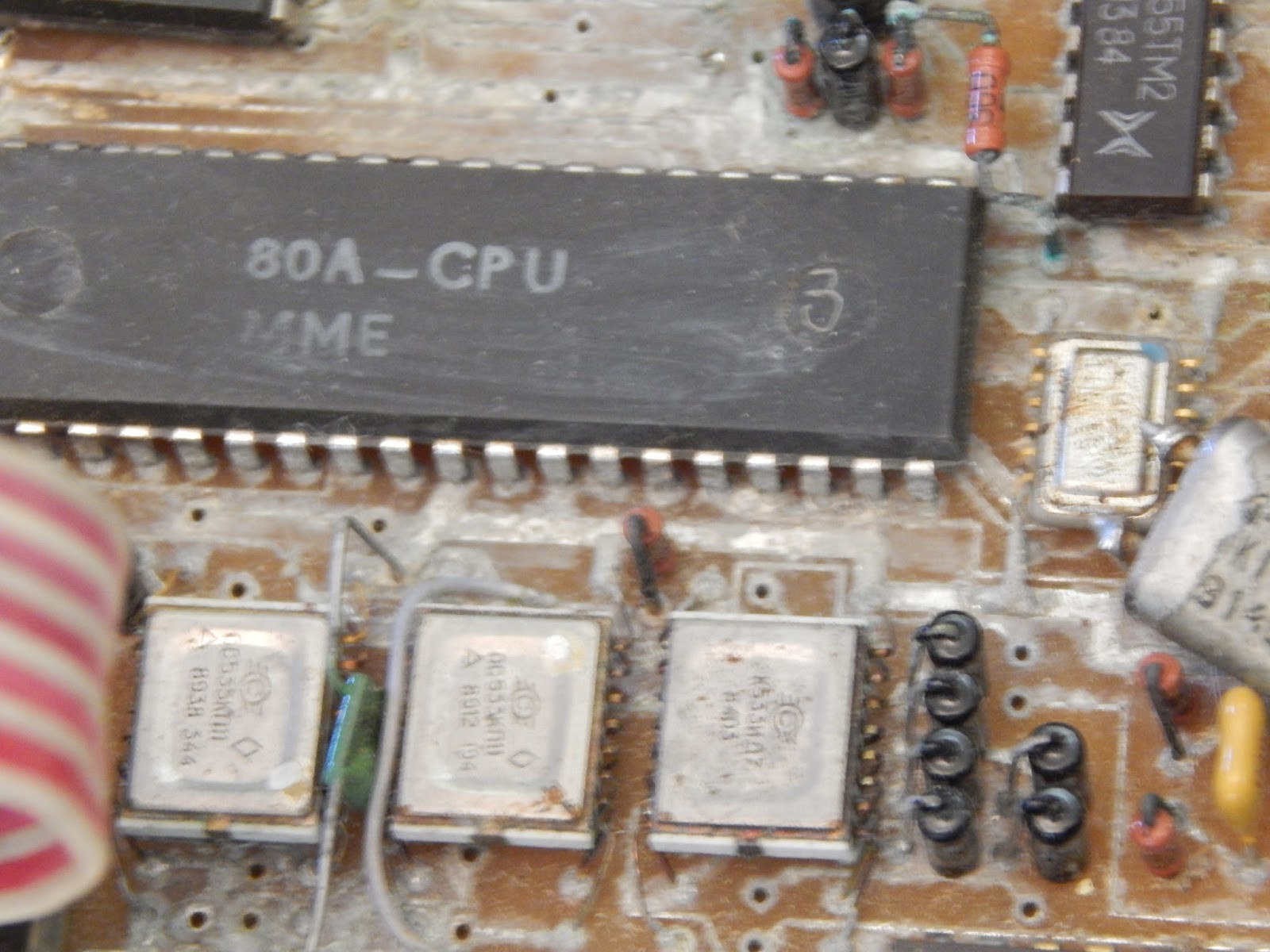
The one board Soviet microcomputer.


Bugbook Computer Museum
Soviet 8080 clone microprocessor


CPU is Soviet 8080 clone microprocessor.


Click on photo's to enlarge
Bugbook Computer Museum
Soviet EPROM


Soviet EPROM or POROM ( Program once ROM).


Bugbook Computer Museum
RAM Memory chips.


RAM Memory chips.


Bugbook Computer Museum
Soviet military parts in computer


Soviet military parts in computer.


Bugbook Computer Museum
Soviet Microcomputer Keyboard

Soviet Microcomputer Keyboard.


I had some interesting times visiting and teaching in the Soviet Union. See blog "CLICK"


--------------------------------------


UR8LV KK4WW N4USA Bugbook
Raspberry pi 2 computer 


Here is the computer we are sending to Oleg.

Raspberry Pi 2 , Touch display,Wifi USB, power supply.

My wife sent the Raspberry out today 7-21-15. I hope it gets to Oleg as fast as the computer he sent to me. 


--------------------------------------
Email June 2015 - David's is Red and Oleg's is Blue.
Hello, David.

My name is Oleg (UR8LV, ex EM1LV).  I"m from Ukraine, Kharkiv.

Do you have interest to home made computers of 1988-1989 as component of history? :)
One of my client want to sale interesting model called "Leningrad-2" for chipest money. 

Comps not working for corrosion of board, but looks well around. 
Not so good inside home made case, but all interesting moment are ready to enjoing: Soviet military chips with gold, capacitors with tantalum, military wires with PTFT. And home made board. 
I remember that time as well: a lot of radioenthusiast had made personal Sinklair...

Well, tell me know about your interest, please.

Hi Oleg - Thank you - what price and how would we get the computer here to the states?  Dave KK4WW

If disassembled into parts and sold for gold and tantalum, then give about 25 usd.
And, shipping in USA by airmail (via Ukrainian post) should be 17 usd.
Totally: 42 usd.
It seems, not so high price. :)

But, i'm not looking for money. This is not my business :)
Ready make a radioamateurs change to Raspberry Pi 2 with TFT screen (of course, not so modern for high price- something like 4").

How about that?

Hi Oleg - the price is fine - My concern is will the computer really show up at my address?? the Ukraine post does not seem to reliable?? 73 dave

Good morning/good evening, David :)

Give me your address, i am ready to send parcell today or tomorrow with track-code. 
Our post is working well for reliable price, i work as manager of Kharkiv regional amateur radio society and sent QSL"s all around world without lossless.

73 Oleg

Hi Oleg - Thank you - I will get some funds to you when the computer arrives - I will be looking for the "Sinclair in Russia " story and hope you will allow me to post it on my blog 

Welcome, Dave.

I'm not very good at English. I hope that you understand the basic idea.

Sinclair history in the Soviet Union is very well described here on this page.

In short, the first clone of Sinclair made in Lviv (Ukraine) in 1984 in one of the secret research institutes.
There are the names of these men: Edward A. Marchenko, Yuri D. Dobush, Evgeny Natopta, Oleg Starostenko.

Then, the scheme improved in Leningrad (Russia), Rostov (Russia), Moscow (Russia), Kharkov (Ukraine).

It was a real boooom. I think that in the USSR, Sinclair have made several millions since 84 till 90
The main problem has been in detail. They can not be bought, and they just stole those who worked in military factories. There was a lot of plants.
In one city-my Kharkiv- it was located 15 electronics factories.

In early 2015, I thought of Sinclair. Just was nostalgia. And I tried to buy a sample. When a person is brought to me, I'm just stunned: chip gold, palladium and capacitors tantalum wire with Teflon. This is the whole history of the Soviet military radio in one product! A case has been made lovingly homemade. This, too, reflects the desire of our people to science.

I do not need this machine, and I was ready to disassemble parts and to return the money, but the thought of your museum and thought it was a fine specimen for you.
And it's a beautiful monument to the Soviet idiocy, when, instead of the right people pans, pots, microwave ovens, washing machines, computers, all the forces rushed to war production. In the late 80's just started the hunger ...

That's the story.


Hi Oleg - Thank you for the story -it is most interesting.   What do you mean by this part at the end??

By the way, parcell now on custom in Kiev ----  who or what is parcell ??
I need to find out how to translated the web page from Russian to English.
I visited Lviv many times from 1990 to 2005.  Have many friends there - Helen Goncharsky just spent 4 weeks with us from Lviv. Helen and her husband, Victor hosted all our meetings in Lviv for the past 25 years.
73 dave


Good morning, Dave.
In 90-s in the Soviet Union was a real hunger, but the industry continued to produce military products.
Were coupons for food and essentials things. You may see form of coupons on sugar, vodka, salt, meat e.t.c. in 1986-1993 
The people looked a new and designed the first computers even in such terrible conditions.

I know Victor and Helen very well: US5WE and UR5WA. :) 
It seems, they know English much better me and may help translate article. 
Another way is Google translator on-line. 

Parcel is parcel post with track code RC610549694UA. 
You have to get package a week or two.
Oleg


Hi  Oleg - The computer arrived in fine condition.  That was really fast.  How do I send you the funds ? I have your address from the package if I send the funds there.  I will be doing a blog about this good experience with you and the computer soon.
It was very generous of you to go to this effort to send the computer to me and I really thank you for sending it to me.
73 Dave
-------------------------------------------------------

Bugbook Historical Microcomputer Museum
David Larsen
Roger Cain KI6FYF
L-R Roger Cain KI6FYF
Carol Milazzo  KP
MD4
Obtaining the Soviet microcomputer has been a very pleasant surprise.  I have been writing this blog for several years and this work has many interesting offers. I have sure made a lot of new retro computer friends and many museum curators. I have also had many out of town visitors and a number from other countries that have made the trip just to visit me and the museum. Just this past week Carol Milazzo KP4MD and Roger Cain KI6FYF from California made a special trip to the museum.

Radio Contact N4USA Dave made with KP4MD - Carol was in Puerto Rico operating 17 meters SSB , 3 foot magnetic loop antenna and 12 watts of power. KP4MD 55 and N4USA 57 signal reports.

           ."by David Larsen"  KK4WW Computer Collector Historian 


Saturday, June 27, 2015

EPROM - Erasable Programmable Read Only Memory - computer memory


Bugbooks
info click
Computer Museum Bugbook Bugbooks
1702A EPROM
The first (1971) EPROM ( Erasable Programmable Read Only Memory ) 1702A changed computing forever. The 1702A is  Nonvolatile memory chip and does not lose its contents (program) when power is turned off.  RAM (Random Access Memory)  used at the time was volatile - the contents is lost every time power was turned off.  Being able to program the microcomputer and have the program or data stay resident when power is turned off was essential. The EPROM was invented by Dov Frohman of Intel in 1971, who was awarded US patent 3660819 in 1972.

Click on photo to enlarge
Computer Museum Bugbook Bugbooks
1702A EPROM

It is interesting to look though the quartz window of the EPROM integrated circuit (IC) at  the die inside. You can see the little gold wires that connect the die to the pins on the holder.  The quartz window allows the memory to be erased by exposing it to UV light and then it could be reprogrammed. More information about EPROM's "Wikipedia CLICK"


This is a revisit to EPROM's - see my earlier post "Vintage EPROM Memory 1702A -Made microcomputers, robotics and micro-controllers practical 1971 CLICK"


Computer Museum Bugbook Bugbooks
1987 reciept for 359 EPROM's


In 1987 I purchased a nice collection of 359 EPROM's from Computer Surplus Store for $229.85.  This looks like a good deal today at 50 cents each.


Computer Museum Bugbook Bugbooks
1987 receipt for 359 EPROM's


Date & Price


Click on photo to enlarge
Computer Museum Bugbook Bugbooks
1702A 2708 EPROM


Here  are the 359 contained in 30 storage tubes. Almost all the EPROM's are the beautiful ones in a white ceramic package and gold pins.

This shows hoarding as I indicated in my last Blog.


Computer Museum Bugbook Bugbooks
1702A 2708 EPROM close view
A closer look at some of the 359 EPROM's.

I purchased these 28 years ago with the idea of using them to make a display plaque to put on a desk or hang on the wall. The white ceramic EPROM's with the clear quartz window a very interesting to view and with some additional photographs and history with the EPROM it would be an eye catcher for sure.

You can get a good look by CLICKING on the photo.


As you can see I have not made the displays using the 359 EPROM's and would like some help or suggestion about how to put them good use . Of course I could sell them on Ebay but that would not be much fun. Contact me here with your idea's "Contact David CLICK"

--------------------------------------------------------------------------------------
Some of the EPROM'S  in our inventory are in applications like the board below.
Click on photo to enlarge
Computer Museum Bugbook Bugbooks
menory card 2716 EPROM
I have hundred's or perhaps 1000's more of the EPROM'S in the museum warehouse. Many are in the nice white package.

Here is a typical use of EPROM's - this board contains (16) 2716 EPROM's . The operational program for this computer is contained in these 16 nonvolatile memory chips. The 2716 contains 16K Byte of memory.

Can someone help me identify this early microcomputer board??


Computer Museum Bugbook Bugbooks
2716 EPROM


Better view of the 2716 chips on the computer board shown above.


----------------------------------------------------------------------
A small collection of EPROM'S
Click on photo to enlarge
Computer Museum Bugbook Bugbooks
Intel 1702A EPROM


A small batch of 1702A chips unused in the original Intel Package. The package is also interesting and a collectible item.


Computer Museum Bugbook Bugbooks
Intel 1702A EPROM 


 New unused Intel 1702A EPROM chips.


-----------------------------------------------------------------------------------------------------------
Here is a video I made in 2009 about the 1702A EPROM "CLICK"
-----------------------------------------------------------------------------------------------------------
Bugbook Historical Microcomputer Museum
David Larsen
I have hundreds of EPROM's in the museum warehouse and many of them are still on computer boards like S100 memory cards. Please help with some innovative and interesting uses for all these beautiful IC's. Still having fun at 76 yrs. 
           ."by David Larsen"  KK4WW Computer Collector Historian