Showing posts with label Bugbook Historical Microcomputer Museum. Show all posts

Saturday, February 14, 2015

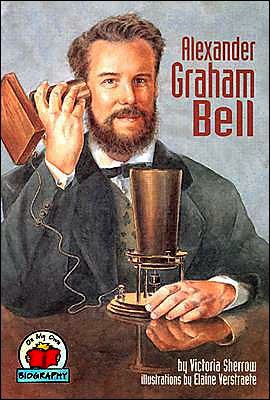
Alexander Graham Bell - he was making a hearing aid & instead got the telephone - 90 seconds of history.


Bugbooks
info click

Bugbook Historical Microcomputer Museum
Alexander Graham Bell
Here is 90 seconds of how Alexander Bell invented the telephone while working on a hearing aid for a friend. Podcast story teller is Curtis Anderson N4ON curator of the Telephone Museum in Richmond, Virginia. Podcast made during his visit to the Bugbook Historical Microcomputer Museum in Floyd Virginia.


     Bell invents the telephone on way to making hearing device for hard of hearing.

Bugbook Historical Microcomputer Museum
Curtis Anderson N4ON
Curator of the Telephone Museum


Curtis Anderson N4ON  looking at a 1972 Intel "Intellec 4" -- this computer is an  Intel 4004 microprocessor developement system. Not very many of these computers in collections. 

Here is video I made in 2010 - a look inside the Intellec 4 computer.


Bugbook Historical Microcomputer Museum
David Larsen
Thank you for the visit Curtis - it was fun to talk about vintage computers and old times during our careers 30 or more years ago.
           ."by David Larsen"  KK4WW Computer Collector Historian 

Tuesday, January 13, 2015

Vintage Soviet Computer from Ulyanvosk Russia 1991


Bugbooks
info click
Bugbook Historical Microcomputer Museum
Soviet Flag
My wife and I were fortunate to travel in the old Soviet Union before it broke up in mid 1991.These visits were for two purposes - To teach about computer automation to deliver donated computers to people in Russia and Ukraine. We were able to obtain both Ukraine and
Russian amateur radio license's and operated Ham Radio with contacts made from Lviv, Ukraine, and Moscow & Ulyanovsk, Russia.  We were representing "Virginia Tech" (VT) for teaching and "The Foundation For Amateur International Radio Service" (FAIRS) for the radio activities.We had to get approval from the US Department of State for all our computer teaching and donating computers. That was an interesting exercise with lots of forms -- it did work out just fine and we made 20 or so more visits after the breakup of the Soviet Union.


Click on photo's to enlarge
Bugbook Historical Microcomputer Museum
Soviet Microcomputer 
The president of Ulyanovsk Polytechnic Institute (UPI) "Vladimir Efimov" gave me this computer during our first visit when we signed an exchange agreement with his Institute and Virginia Tech.  This exchange agreement resulted in a number of faculty visits between VT and UPI. Valdimir made one of these trips with some of his faculty members and not only visited VT but they all came out to our house for dinner one evening.


Bugbook Historical Microcomputer Museum
Soviet Microcomputer 
Here is the bottom view with the IC's showing. I did not know much about this computer however when I posted the video Ed S send a message that this is a clone. Here is his information

Ed S- It's a Delta-S (Дельта-С) a Spectrum clone - the multi-function keys are characteristic of the Spectrum keyboard. In this case there's an additional mapping, of Cyrillic characters. Therefore not precisely a clone, but an adaptation. Some photos:
http://zx-pk.ru/showthread.php?t=17008
Wiki page:
https://ru.wikipedia.org/wiki/Дельта-С     Thank you Ed for the information.


Bugbook Historical Microcomputer Museum
Soviet Microcomputer 

The processor is a Z80 from Sharp.

A video of this computer with a look inside "CLICK"


Bugbook Historical Microcomputer Museum
Soviet Microcomputer 

The input / output is mostly some Din looking connectors on the back of computer.


Bugbook Historical Microcomputer Museum
Soviet Microcomputer 


The Keyboard  is a combination of English &  Russian  in Cyrillic.


___________________________________________________________
More activities during this visit. 
This visit lasted 3 weeks and our group carried about 50 personal computers to donate to the Soviet people.

I wrote a letter to Soviet President Gorbachev in November 1990 ( this was about 6 months before this visit). I did not know if this would help however it opened many doors for us with response from various parts of the Soviet Politburo.
Click on Letter to enlarge for reading
Bugbook Historical Microcomputer Museum
Soviet Letter


Deputy Chairman of USSR State Committee for Public Education.
This letter is giving us the go ahead for our University exchanges.


All the letters from officials in the Soviet Union referenced our letter to President Gorbachev.  It was reported that my letter made a good buzz  in the Kremlin.


Bugbook Historical Microcomputer Museum
Continuing Education Unit for Soviet Union


We may have been the first to issue CEU's by an American University to Soviet participants. The office of International Development at Virginia Tech was a real supporter of this work.

This work helped me receive this nice award before retiring from VT .


Bugbook Historical Microcomputer Museum
Krinkle Central Radio Club , Moscow
Our Group was one of the last from the West to Visit the Krinkle Central Radio Club (QSL Box 88) Moscow.  QSL Box 88 disappeared at the break up of the Soviet Union.

You see in this photo Yuri Zubarev, President of Radio Sport Federation ( Krinkle Central Radio Club) seated. He gave us many gifts including a beautiful Samovar ( used to heat water for Tea). I have this on display in my office - very nice.
R-L W6YMR, Me KK4WW, Yuri, N0ISL.


Bugbook Historical Microcomputer Museum
Letter from Radio Sport Federation


The letter from Yuri Zubarev - you will see this is the letter giving us assistance to get the donated computers into the Soviet Union.

With Soviet President Gorbachev putting out the word to help our group we were treated very well in all efforts during this visit.


If you made it this far you have a lot of patience and here is a summery of the trip. 

David KK4WW and Gaynell KK4WWW Larsen make their second visit to the former Soviet Union. This time additional travelers join them  they include John Douglas N0ISL, Bob Friebershauser W6YMR and his wife Virginia.  The group visited Lviv  Ukraine and Ulyanovsk Russia. Computer workshops were taught in both locations and many amateur radio contacts were also made from Ukraine and Russia. This trip also included a visit to the well known "Box 88" Krinkle Central Radio Club in Moscow.  Box 88 and the club vanished after the break up of the USSR just 3 months after our visit.

W6YMR and N0ISL are now silent keys ( passed to the other side)


Here is a podcast recording with comments by David and Gaynell Larsen about visit that was so exciting and interesting for us. We still talk about this visit 25 years later,

Bugbook Historical Microcomputer Museum
David Larsen
 Just a message - Don't sell yourself short - Think of what you really want and ignore all the people that say "It can't be done".

This Soviet mission is one of many great experiences my wife have had the privilege of sharing.   
                  ."by David Larsen"  KK4WW Computer Collector Historian 
                                          Join museum on Twitter   Join museum on FB


Google map and view of Ulyanovsk, Russia


Saturday, September 13, 2014

Vintage Computers -Graduate Independent Study at "Bugbook Historical Microcomputer Museum"

Bugbooks
info click
We are delighted to be working with Grayson Van Beuren in a Virginia Tech -  Graduate Independent Study program at the museum. Grayson became interested in doing a study after seeing the "Bugbook Historical Microcomputer Museum"  article in the Roanoke times by  Catherine Van Noy.  Grayson also visited our museum during open house last month.  Grayson has started his project  by making several of our  old computers operational and encouraging folks to give the operating historic computers a try.

Click on photo to enlarge
Bugbook Historical Microcomputer Museum
L-R Grayson Van Beuren, David Larsen-Curator
Here is Grayson's Study plan.
Grayson Van Beuren
Material Culture and Humanities
Computers and Museums Material Culture Project
Independent Study Proposal

This independent study’s purpose is to explore the history of the electronic computer through its material culture. It also aims to facilitate a better understanding of the unique preservation and presentation problems surrounding this delicate and largely esoteric field of material culture.                                                          


Grayson Van Beuren tells about his Independent Study at the museum

Bugbook Historical Microcomputer Museum
L-R Emily Wilson -Assistant Curator,
 Grayson Van Beuren
The independent study will occur through a partnership with the Bugbook Historical Microcomputer Museum in Floyd, Virginia. The museum’s founder, retired instructor of instrumentation at Virginia Tech David Larsen, has agreed to host a part of the IS. The museum’s collection represents forty years of collecting on the part of Mr. Larsen. From the museum website:

Mr. Larsen’s expertise in the field of microcomputers, and especially the collection and preservation of microcomputers, should make this a valuable independent study for the student.

Bugbook Historical Microcomputer Museum
Grayson with Apple 1 computer project

The independent study will be comprised of two parts: weekly visits to the museum of three to four hours during which the student will act as an intern, learning about the presentation and preservation of computer material culture in the process, and outside research into the history of the preservation of computer hardware and other forms of material culture associated with the computing field. These two parts of the study will culminate in the student writing a 10-15 page paper summing up his experiences at the Bugbook and examining the problems surrounding preservation and presentation of computer material culture in museums and other historic institutions.
-----------------------------------------------------------------------------------------------------------------

Bugbook Historical Microcomputer Museum.
Nathan, Conette, Gaynell Larsen, David Larsen (curator)


We are getting more visitors in the museum every day. On the left is Nathan and Anat Oster from Israel - Saturday 9-13-14. Nathan is a lawyer and Dr. Oster is Head of  Computer Science department, Beit Berl Collage.  They were very enthusiastic about our museum display. Their work in Israel sounds real interesting and we may visit them in the future.


David Larsen
The curators here at the museum are looking forward to working with Grayson. I am sure we will all learn from this independent study.