Wednesday, December 25, 2013

Vintage Computers - The "Bugs" are 40 years old !

Bugbook David larsen
8080 Bugbook 
Bugbooks Bugbook
Bugbooks
integrated Circuit Bug
Integrated Circuit looks like a Bug 

When Bugbooks 1 & 2 were written a logo was needed for the books and other projects. The books were written to teach basic digital electronics using small Scale Integrated Circuits.  I named the books bugbooks because the small digital integrated circuit looked like a bug with its legs. I had made several attempts at a logo however they were not very inspiring. The best I can remember Professor Peter Rony ask students to submit their ideas for a logo and  this one was selected.  I have been very pleased with this logo and it has made many millions of impressions during the past 40 years. The 'Bugs' logo has been great as a branding image for the work of my colleagues and myself.


Here are a few examples of the Bugs use during the past 40 years.
Enlarge the photo's by clicking on them and then even more by a right click and select "View image' you can easily read the text.
John Titus
Code card 1978 

John Titus designed this very useful octal code card for 8080 microprocessor machine code programming in 1978.


David larsen
Japanese translation
 of Bugbook 2


Japanese translation of Bugbook 2 in 1976. The Bugs logo is prominent on the front cover. Several of the Bugbooks were included in these translations.


David Larsen
Italian Bugbooks


An advertising button used by our Italian representative.  Our group had a large presence in Italy during the late 70's and early 80's. About 20 of our Bugbooks were translated into Italian,  we taught 15 or so microcomputer instrumentation seminars, and a lot of the MMD-1 training computers were sold.


Fist Fighter code fixer
Fist Fighter code fixer 
Our group was called "The Blackburg Group" and the Bugbooks was one of the group's many ideas and projects. Here is a product Dr. John Titus designed for the amateur radio market. This was called the fist fighter and it made perfect code out of code sent manually with a telegraph key. A very clever idea but it was not a popular product.  It did use the 'Bugs Logo' as you can see in an expanded photo.


More information about the name and use of the 'Bugs' & 'Bugbooks'

The reason I call our museum  "The Bugbook Historical Microcomputer Museum"  is because of the "Bugbooks"
David Larsen KK4WW
Bugs Logo 
. About 1974 I was part of a team that produced these books. The first two Bugbooks were written and published by Professor Rony and I.  I named the books bugbooks because the small digital integrated circuit looked like a bug with its legs.  Professor Rony typed the manuscripts and we self published the first few printings of the "Bugbooks" . 
www.bugbookcomputermuseum.com  These books were the start of a book series called "The Blacksburg Continuing Education Series" .  The books covered various topics of digital electronics, computers and software. Dr. John Titus and Dr. Chris Titus joined the group and became important members of our team.  During the period 1974 to 1984 about 75 books were published with a circulation of over 1 million copies.  Our team hired 31 other authors to help write books in the series. In addition to the books our team designed several computers and other teaching / engineering aids that were sold world wide. John Titus was the computer designer and I designed the digital engineering  / teaching hardware aids.  Many engineers, technicians and  electronic hobbyist of the late 70's and 80s used  these books and hardware.  All the books and hardware are on display in our museum. A reoccurring comment from  folks visiting the museum is - I  learned digital electronics from the "Bugbooks". The Bugbook story involves many relationships, interesting events and eclectic people.  It is my  intent to get the details of these adventures in writing -- soon I hope.


KK4WW
David Larsen 
It has been an interesting 40 years.  I am still getting calls about the Bugbooks and other computer and electronic things. Just tonight a fellow here in Floyd called and was in need of a 10 ohm resistor. He could not find a shop in the area that sold these parts.  I was able to find one in my old junk pile and will deliver it to him tomorrow.  He needed it for his computer power supply - Still doing computer projects.
WOW just as I posted this I received an email from Earles L. McCaul the author of   TRS-80 ASSEMBLY LANGUAGE MADE SIMPLE.  This is one of the books in our "Blacksburg" series of books from 1981.

  "by David Larsen"  KK4WW Computer Collector Historian   
   Send Message CLICK   Like us Click

Thursday, December 19, 2013

Vintage Computers -First PDP computers from Digital Equipment Corporation early 1960's


 Lyle Bickley tell story of how Digital Equipment Corporation (DEC) started to make their first Minicomputers.

Digital Equipment Corporation DEC
DEC
Bugbooks
Bugbooks
How and why Digital Equipment Corporation (DEC) started to make minicomputer in the early 1960's. DEC was already making digital modules for science and industrial use. These consisted of the usual AND , OR , NOR, NAND , NOT gates and various filp-flops. Other special modules were made for instrumentation as well. 

Having all this digital capability DEC engineers wanted to use the modules to make a computer. Management resisted this for fear of competition from big Blue (IBM).  Management finally gave in however the computer could not be called a computer it was called a "Programed Data Processor" or just PDP.  The first was the PDP1 soon followed by the PDP8. Folks began calling them minicomputers.

These early PDP computers  are in great demand by collectors however it is believed only 3 PDP1's still exist and the only one operational is at the Computer History Museum in Mountain View, California.  Later models are available but the very early ones - PDP8, PDP8S are difficult for collectors and computer retro  folks to find. I was very fortunate to have acquired several original PDP8, PDP8S and PDP11/70 computers. My interest is more with historical microcomputers. The PDP minicomputers in the "Bugbook Historical Microcomputer Museum" have now been pasted on to other retro collectors of minicomputers. You will some of my past blog posting about these transfers/collectors.

PDP1 Minicomputer
PDP1 Minicomputer 
Photo of DEC PDP1 minicomputer at the Computer History Museum in Mountain View, California.  Lyle Bickley (seated at the control panel) is on the PDP1 restoration team at the museum.  This is the only operational PDP1 in the world.

Video of the PDP1 restoration story by Lyle Bickley 'CLICK'

Photo L-R My wife Gaynell Larsen - Bob  Rosenbloom and Lyle Bickley. This visit was in October 2013.


KK4WW
David Larsen
Thank you Lyle Bickley for allowing me to make this audio story and publishing it on my blog post.  The recording was made while touring the Computer History Museum in Mountain View, California --- lots of background noise however I found the story very interesting and I hope you do as well . Thank you for taking a look - listen.

 "by David Larsen"  KK4WW Computer Collector Historian   
   Send Message CLICK   Like us Click


Wednesday, December 11, 2013

Vintage Computers - Where do computer collectors find them ?

David larsen Bugbooks
Bugbooks 
SCELBI Microcomputer
SCELBI Microcomputer 
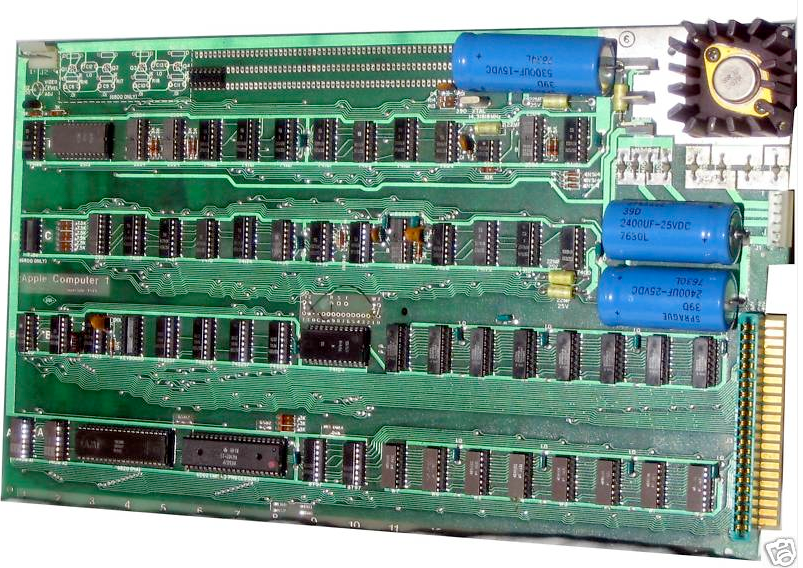
How did you find the computers in your 40 years+ of collecting ? That is a question I get often. My historical collection of microcomputers is very nice and includes a lot of hard to find computers - like the Apple 1, SCELBI , and a warehouse full of historical computer memorabilia.

First of all I have been involved directly with computers for over 50 years  & that was a big help. However the source of most of my collection was a result of just advertising for them.  For more then 30 years I ran  very simple classified advertisement "wanted pre1980 microcomputers for historical collection".

Enlarge the photo's by clicking on them and then even more by a right click and select "View image' you can easily read the text.

vintage computer wanted advertisement
Ad in QST magazine
 This simple ad placed in about 6 publications every month for many years resulted in 1000's of responses and resulted in a wonderful collection of computers  for the 'Bugbook Historical Microcomputer Museum' collection. Often a pleasant and sometimes humorous dialog would develop between me and the person responding to the advertisement. 


Computer Collector
Computer Collector


I have many 100's & probably 1000's of letters, fax's, emails, postcards, notes scratched on the back of napkins, and phone logs as well.  I kept them all and now it is interesting to look back at them. 

I selected a few of the offer letters and notes -  I hope you find them interesting.

------------------------------------------------------------------------------------------------------

Adam Schoolsky letter
Schoolsky Apple 1
Schoolsky Apple1 Computer
I did purchase this Apple 1 Microcomputer from Adam Schoolsky & you can see in the letter many other nice items as well. Here is a video about this computer in our "Bugbook Historical Microcomputer Museum" 'CLICK'


----------------------------------------------------------------------------------------------------
Craig Solomonson offered me this Apple 1 computer July 1996 for his price of less then $40,000.

WOW I sure missed a computer that made the big time - Auction at Breker Nov 28, 2010 - Yes, Italian collector Marco Boglione paid $212,000 for a 34-year-old Apple-1

Craig Solomonson  Apple 1
Craig Solomonson  Apple 1
The information below is from the Apple 1 Registry 

Solomonson Apple 1 
NTI logo at one time purchased from Frank Anderson, an electronic dealer in Great Falls, Montana by Craig Solomonson for MECC.  Craig reports that this computer was sold by Jobs and shipped from his parents address. Woz seemed a bit confused when Craig showed him the invoice and asked about it. He said "Not sold by us, although Job's may have sold it without telling me." 
  • Sold by Craig to Jesse Sackman in California
  • $50,000 unit sold in Ebay auction 320447681957, late in 2009
-------------------------------------------------------------------------------------------------------


Byte Magazine Number 1
Byte Magazine 1

Donation Postcard Larsen Blog

Sometime we  received a note on a card or scrap of paper.  This card from John was loaded with good stuff and for only $25.  First issues of Byte and Kilobaud magazine and a COSMAC VIP microcomputer. This was added to our historical collection.


--------------------------------------------------------------------------------------------------------


Regis Mckenna & Steve Jobs
Regis and Steve Jobs 
McElwee Letter Larsen Blog
At times the letter or inquiry had lots of interesting historical information about the collector or computers. In this letter McElwee tells about his activities in the very early days of the Microcomputer Revolution - MITS Altair, Pertec, first person to work with Apple at the Regis Mckenna Advertising Agency ( He still has a copy of the first Apple Marketing Plan), also he worked for Atari. That is an interesting  historical background. I don't remember just what I purchased from him - I know I would have liked everything in his letter.


For the rest of the story read more

Thursday, December 5, 2013

Soviet Union Vintage Computers - Donating computers to the old Soviet Politboro - USSR - 1991


Soviet Flag
Soviet Flag
david Larsen logo
Bugbooks
In my last post I mentioned the fun I have had the past 50 years with computers and looking back on this effort to donate & ship computers to the Soviet Union in 1991 is one of those fun times. The timing was really good as  this would have been a whole different story about 8  months later with the shift in power from Soviet President  Mikhail Gorbachev to  Boris Yeltsin .This shift in power was the break up of the Soviet Union into 12 independent countries and the downfall of the communist system.  

Boris Yeltsin
Boris Yeltsin
Mikhail Gorbachev
Mikhail Gorbachev
It all started with our first visit (October 1990) to the Soviet Union with an invitation from Victor Goncharsky ( An amateur radio operator UR5WE in Lviv, Ukraine) to help bring the average citizen into the computer world. Up until about that time Soviet citizens were not allowed to have a computer in their home or personal possession.  This first visit resulted in taking one computer and teaching material for a training workshop.

I was a tenured faculty member at  Virginia Polytechnic Institute (VT) and made arrangements to issue Continuing Education Units (CEU's) for the 4 day microcomputer instrumentation workshop. The process of getting approval to do this work and carry the computer required the approval of many agencies and groups.  President George W. Bush and the USA State Department were some of the groups helping with  these efforts. We did make this work and my wife and I in October 1991 made our way to Lviv, Ukraine via Moscow and a 24 hour train ride with our computer and all the teaching material. It is believed this was the first time an American University awarded CEU's in the Soviet Union.

KGB
KGB
This first trip was a success and we realized the great need to get computers to some of the citizens of the Soviet Countries. This and the next 15 visits were a real fascination for me, my wife Gaynell and our colleagues. Always intriguing, a bit risky and filled with stories of KGB, an acquaintance being killed, and others being sent to jail.  We were working with permission at the highest level of the Politburo and our government for these efforts to succeed. 

Our adventure Donating  Computers to Soviet Citizens
                                                             The story


Why am I writing and sharing this information ?
  1.  I would like to show that it is  possible for average folks like me to have some really great experiences. Be careful what you ask for you may get more then you wanted.
  2. You can work at the highest levels if you have a good message - these adventures were helped along by  President George W. Bush, USA State Department, Soviet President Gorbachev, many members of congress, various ambassadors and many other folks. I have saved all these correspondences - What a ride looking back over these - 100's of letters and papers. Once I made a couple of Soviet visits, officials at VT were on board with this and even gave me some special  funds to carry on this work.
  3. I encourage you to get out of the box and try some new adventures - I do not suggest however taking unwise risks to you own safety. Show your skeptics you are not a pipe dreamer but a real doer. They will of course be envious when you do succeed.
  4. They say you can't live in the past - That is true but it sure is nice to look back on fun and successful events from your past and wonder  --- How did I do that ? it was just great!
  5. Actually I did have opposition at my university (VT)  by some folks who did not like my time away and the fact I was not just grinding away in my office.  I did not have resistance from officials at VT that had power to stop this work - it was good I had tenure - The Virginia Tech President at the time Dr. Jim McCommas was a great fan of this work and helped with funding and in many other ways. Dr. McCommas sent Virginia Tech Documentary film producer "Jerry Scheeler" on one of our trips. Here is his film "Click" . Most of  the opposition came from faculty members who were envious, jealous and just too lazy to get out of the box.
  6. I did this long term project because it was interesting, useful for me, the University and our whole country.  I was rewarded for this work near the end of my 31 years of teaching at VT with a University Presidential Award (1995) University Public Service Excellence Awards. This was the first time this outreach award had been presented by VT.
  7.  A great bonus- My wife and I  received amateur radio licenses in Russia, Ukraine, Lithuania, and  Poland .  It was great fun and my wife Gaynell was the first American woman to receive an amateur radio license in some of these countries. Of course operating from there was fun - my Ukrainian call is UR5WUS and Russian call is UA4LWW.
A story about our first donation of computers to the USSR appeared in  the American Radio Relay League journal QST September 1991. 

For the rest of the story ......